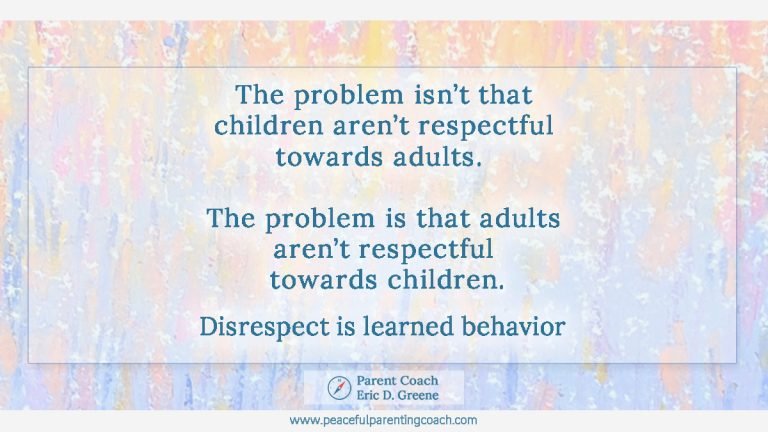
Most parenting advice starts with the question: How do I get my child to listen? (Or to behave, or to be more obedient)
But peaceful parenting isn’t about that. It’s about the active work of connection with your child. It starts as an inside job where we focus on our own emotional regulation so we can show up as a steady guide. And instead of enforcing a rigid map of expected behavior, we become a compass that helps our children find their own way.
Peaceful Parenting Beginner’s Guide
In this peaceful parenting guide for beginners, we will look at why behavior is simply communication. Most importantly, we will learn how to build a relationship based on trust instead of control. Consider this your map to explore a new parenting paradigm. You will learn:
What Peaceful Parenting Is
Peaceful Parenting is an approach to raising children in which there is no violence, no punishment, no shaming, and essentially no causing harm, even if it’s mild.
In place of harshness, toughness and violence, peaceful parenting uses other approaches based on connection and attachment, understanding and empathy, compassion, kindness and respect.
Peaceful Parenting is Peaceful
Yes, peaceful parenting really is peaceful! In other words, it’s completely non-violent.
Peaceful parenting takes a completely non-violent approach to raising children. There is no spanking, no smacking, no slapping, popping, hitting, or physical attacking of any kind.
In addition to lack of physical violence is lack of aggressive, combative and argumentative words and attitudes. The approach in peaceful parenting is to connect with children, talking through issues, acknowledging feelings and placing emphasis on emotional well-being.
This approach aligns with the American Academy of Pediatrics recommendations on effective discipline. Their research confirms that physical punishment is not effective and can be harmful to long-term development.
Peaceful Parenting Is Based On Connection And Respect
Peaceful parenting is based on connection, respect, and treating children with the same sense of decency and dignity afforded to anyone else.
In peaceful parenting, the connection and emotional bond between parent and child is given great emphasis. A lot of time and effort goes into nurturing and building this connection, or what we call attachment. The idea is that the closer the bond between parent and child, the greater harmony in the home exists, which is beneficial to everyone involved.
When a child feels truly connected to you, they are naturally more inclined to follow your lead. We stop forcing them to listen and instead give them a reason to want to.
Peaceful Parenting is Restorative rather than Punitive
There is no punishing in peaceful parenting. No time-outs, no grounding and sending kids to their rooms or some other isolated area, no taking things away, and no threatening to take things away from children either (except in cases where immediate safety is an issue).
In peaceful parenting, there is also no shaming. No guilt-tripping, no blaming and making children feel bad about themselves.
However, simply removing punishment is not enough. We want to replace that with skills that actually teach. We need a new toolbox to navigate difficult moments without falling back on fear or control.
By putting down the weapons of shame, control and punishment, we open the door to true influence. We stop forcing our children to behave and start helping them build their own internal compass.
Peaceful Parenting Basics – The Book
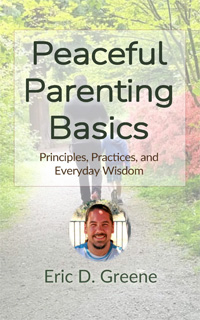 In my book Peaceful Parenting Basics, I dive deeper into the transition from control to connection. You will learn practical tools for the inside job of managing your own triggers while building a foundation of trust with your child. This is your guide to becoming a steady compass instead of a rigid map. It helps you lead with respect so your child never grows up feeling less-than or silenced.
Peaceful Parenting Emphasizes Emotional Well-Being
Very often, parents who are new to peaceful parenting wonder how it can possibly work, raising children without punishing, spanking, shaming, scolding or other forms of harshness.
The reason why peaceful parenting ‘works’ is because it places emphasis on the well-being of both the parent and of the child.
Children learn better when they feel better. (We all do!) Therefore, making your child feel bad can actually be harmful to teaching them the things you feel are important to teach them. This is backed by research from the Harvard Center on the Developing Child. They note that a stable, supportive environment is essential for healthy brain development and the ability to learn.
Instead of “tough-love” and other authoritarian approaches, peaceful parents spend a lot of time listening, expressing understanding, and identifying what needs are going on behind unwanted or harmful behaviors.
What Peaceful Parenting Isn’t
I’ve gone over some of the basics of what peaceful parenting is. Now I’ll talk about what it isn’t.
Peaceful Parenting Is Not ‘Soft’
Peaceful Parenting is not a ‘soft’ or weak approach to raising children. In fact, to be a peaceful parenting day to day takes a lot of strength.
Because as peaceful parents, we are working through and healing our own triggers and childhood wounds, while making a conscious choice to treat our children with love and respect, instead of simply shouting at them, scolding, spanking and sending them to their room.
It takes a lot more strength for a parent to give themselves a time-out and calm their own emotions and triggered reactions, instead of lashing out at a child and demanding they sit in time-out.
Peaceful parenting may very well be the hardest work you will ever do in life because it really is an inside job. This concept is central to the Internal Family Systems model, which helps us understand the internal parts that drive our reactive behaviors
In peaceful parenting, we recognize that disregarding the needs of children comes at a very high cost. The cost is that the child can become disconnected from parents and from the rest of the family. Or the child can develop psychological problems, such as viewing their own needs as less important than those of others.
A Foundational Question in Peaceful Parenting
A foundational question that peaceful parents ask themselves is this: If a child learns that their voice doesn’t matter today, how will they ever find the courage to use it as adults?
If our focus is on getting through the day with a compliant child, we miss the bigger picture of the adult they are becoming. Our job is not to break a child’s spirit. It is to fortify it. When we demand obedience, we are often teaching them that their needs and thoughts do not matter. We do not want to raise people who expect to be walked over or silenced. By treating them with dignity now, we ensure they have the self-worth to stand their ground later.
Peaceful Parenting is Not Neglectful
Sometimes people mistake peaceful parenting for neglect. They assume that a lack of traditional punishment means a lack of parenting. This is a misunderstanding.
Being neglectful is “checking out”. It is being uninvolved and leaving a child to navigate the world alone because you have given up or simply do not care.
Peaceful parenting is the opposite. It is “checking in.” It is a deeply hands-on approach that requires more presence than any traditional method.
In this model, we do not ignore unwanted behavior. We look for the message behind it. We stay “in the fire” with our children during their hardest moments, offering our own calm until they can find their own.
Neglect is an absence of connection. Peaceful parenting is a commitment to it.
Peaceful Parenting is Not Easy
It is a challenge at times to have meaningful talks with children about big feelings and emotions. It is much easier to demand silence and obedience.
The authoritarian approach is, by comparison, the easier way. It is simple to overpower a child because they are smaller and dependent on us. But the authoritarian way is a misuse of power. It meets only the needs of the parent while dismissing the needs of the child.
Peaceful parenting is difficult because it asks us to do our own inner work first. We must learn to respond instead of reacting automatically.
- It requires self-awareness. We work on noticing our own emotional patterns without judgment, which can be an incredible challenge at times.
- It requires regulation. We want to calm our own triggered reactions so we do not lash out – again, very challenging and not easy.
- It requires collaboration. We seek solutions that meet everyone’s needs, which is always more challenging than simply ensuring only the parent gets what they want.
This approach is a path of personal growth. It asks us to heal our own triggers so we can show up with authenticity, curiosity and kindness for our children.
Peaceful Parenting Myths
Now let’s talk about some of the myths about peaceful parenting.
Because peaceful parenting is relatively new and contains concepts and principles that most people aren’t used to, there are some myths and falsehoods that have developed about it.
Here I address some of the most common peaceful parenting myths.
Myth #1: Without Punishment, Children Will Become Spoiled and Entitled
It is a myth that children will become spoiled and entitled without punishment.
Punishment only teaches children how to avoid getting caught. It does not teach them how to do what is right. Peaceful parenting focuses on respect and dignity. When children feel respected, they are more naturally inclined to cooperate with you.
We are not raising children to be entitled. We are raising them to listen to their own internal compass. We want our children to follow their own true north instead of just following a rigid map drawn by someone else.
A child who gets their needs met through connection does not become ‘spoiled.’ They become secure. Entitlement is often just a desperate attempt to fill an emotional void. When we fill that void with love, respect and connection, children lose the need to demand attention in unhealthy ways.
Myth #2: Peaceful Parenting is ‘Soft’
People often say peaceful parenting is soft because it avoids traditional “consequences.” This is wrong.
Peaceful parenting may very well be the hardest work you will ever do in life. It is really an inside job. As Dr. Shefali Tsabary often notes, we cannot give our children what we do not have ourselves. It requires you to stay in the fire with your child during their most difficult moments instead of just shouting from the sidelines.
It takes no inner strength to yell, threaten, or issue a penalty. Those are automatic reactions driven by our own internal struggles. But it does take immense strength to regulate your own triggered reactions so you can show up with kindness.
Choosing to listen and understand is not a sign of weakness. It is a commitment to respect and dignity. This approach does not produce “soft” children either. It raises thinkers who trust their own judgment and have the courage to use their voice.
This is not softness at all. It is an act of bravery that prepares them for a world that will try to silence them.
Myth #3: You Have to be Tough Sometimes
You never have to be tough with your children.
Toughness is a shortcut to fear. It might get you the short-term compliance you want, but it breaks your connection.
When we are tough, we are acting like referees. We are just blowing a whistle and handing out penalties. I prefer to see us more like a coach instead. A coach stays on the sideline and strategizes for long-term success.
You never have to be tough to be a leader. You just have to be a safe place for your child to land.
I argue against ever being tough with your child, and I’ve written more in depth about this here.
Myth #4: Children “Misbehave” to Push Your Buttons
We often label unwanted behavior as a child trying to push our buttons, but this is just a judgment.
Children are not actually misbehaving. They are simply behaving, and then we parents place a judgment on that behavior.
In peaceful parenting, we understand that every action is a form of communication. When we drop the labels, we can stop being judges and start being investigators. We look for the unmet need or the overflowing energy behind the action.
Our task is not to suppress our children’s behavior, whether wanted or unwanted. Our work is to hold space for the human we love regardless of behavior.
Myth #5: The Goal of Parenting is Obedience
Obedience as a goal is actually harmful. It trains children to submit to authority instead of listening to their own conscience.
We do not want to raise children who follow the loudest voice in the room. We want to raise children who can think for themselves.
Peaceful parenting focuses on connection over control. We permit our children to say “no” to us now so they have the strength to trust their own judgment later.
Frequently Asked Questions About Peaceful Parenting
Q: What do I do instead of spanking and punishing?
Instead of punishing, in peaceful parenting, we teach. (See my article 30 Peaceful Parenting Techniques That Work.)
Punishment relies on fear, while teaching relies on trust. When we punish, we are acting like referees blowing a whistle to issue a penalty. Remember, we want to be a coach instead.
This means we stay in the fire with our children when they are struggling. We listen, validate their emotions, and identify the unmet needs behind the behavior.
Lessons are most effective when children feel seen, heard, and understood. Punishment removes that safety while connection restores it.
Q: How long does it take for peaceful parenting to work?
When people ask how long it takes for this to work, I like to ask something else in return. What exactly do you want to “work”?
If you are looking for a way to get your child to comply without question, you are looking for obedience training. Peaceful parenting is not that. We are not trying to install a program of perfect behavior. Obedience as a goal is actually harmful because it teaches children to ignore their own conscience.
The goal is not a child who follows orders. The goal is a child who trusts you.
Peaceful parenting “works” the moment you prioritize connection over control. It works when you choose to be a compass instead of a map. It works the second your child feels safe enough to be honest with you about their big feelings.
This is not a quick fix for an unwanted behavior. It is a lifelong foundation for development of a human being. The timeline for a relationship is not measured in days or weeks. It is measured in the depth of the trust you build every time you stay close and connected with your child.
Q: How do I repair a broken or disconnected relationship with my child?
Start by looking at the feeling instead of the behavior. Stop evaluating your child and start connecting with their internal world.
Show them that your love is a safe place to land, no matter how they are acting.
I also recommend spending ten to fifteen minutes of undivided time together every day. Put away your phone and join them in whatever they love to do.
Listen more than you speak. This small, consistent effort is the foundation for rebuilding trust and healing the bond between you.
Where To Learn More
Peaceful Parenting Basics: The Book: This guide is the best starting point for parents transitioning from control to connection. It covers the basics of understanding peaceful parenting as well as providing practical tools for the “inside job” of managing personal triggers to build a foundation of lifelong trust and connection.
IFS for Parents (eBook): Dive deeper into Internal Family Systems (IFS) to understand the emotional landscape of parenting. This book offers exercises to help you respond with intention rather than reacting automatically to childhood wounds.
One-on-One Parent Coaching: For personalized guidance, you can work directly with a certified coach to identify the unmet needs behind unwanted behaviors and strengthen your connection with your child.
Vivek Patel’s Meaningful Ideas: Vivek offers extensive resources on non-coercive parenting and collaborative problem-solving. His work focuses on building relationships through mutual respect and the belief that children are whole people who deserve the same rights and dignity as adults.